




In Sri Lanka, over 60,000 have disappeared. Occasionally, mass graves are discovered, bringing little hope to those on a lifelong search for their loved ones. One of the latest discoveries — in Chemmani — has attracted considerable attention on social media, unarguably the first to do so. But what does this attention say about technology’s role in documenting Sri Lanka’s wartime atrocities?
Chemmani sits at the entrance to Jaffna town — a reminder of the crimes endured by the Jaffna Peninsula during the 30-year-long armed conflict between the Sri Lankan state and the Liberation Tigers of Tamil Eelam (LTTE).
In 1996, 18-year-old schoolgirl Krishanthy Kumaraswamy was raped and murdered there. Her mother, brother, and neighbour, who went in search of her, were also consequently murdered at the site.
Ambika Satkunanathan, a human rights activist, notes that it’s one of the “rare cases” in which the perpetrators of human rights violations associated with the war were convicted. The first accused in the case — a Sri Lankan army soldier named Somaratne Rajapaksa — told the court that hundreds of disappeared were buried at the same site. Exhumations followed shortly after in 1999 to unearth 15 human skeletal remains.
But justice was halting. There were no further convictions and no further investigations.
Ten years later, in 2009, the armed conflict came to an end. More allegations of war crimes committed against the Tamil people followed. Both domestically and internationally, Tamils spoke about their disappeared relatives, their dead, their wounds still waiting to be healed.
In search of accountability
In the 16 years that followed, successive Sri Lankan governments have given little regard to accountability mechanisms. Calls for an international mechanism for investigations into war crimes have often been dismissed.
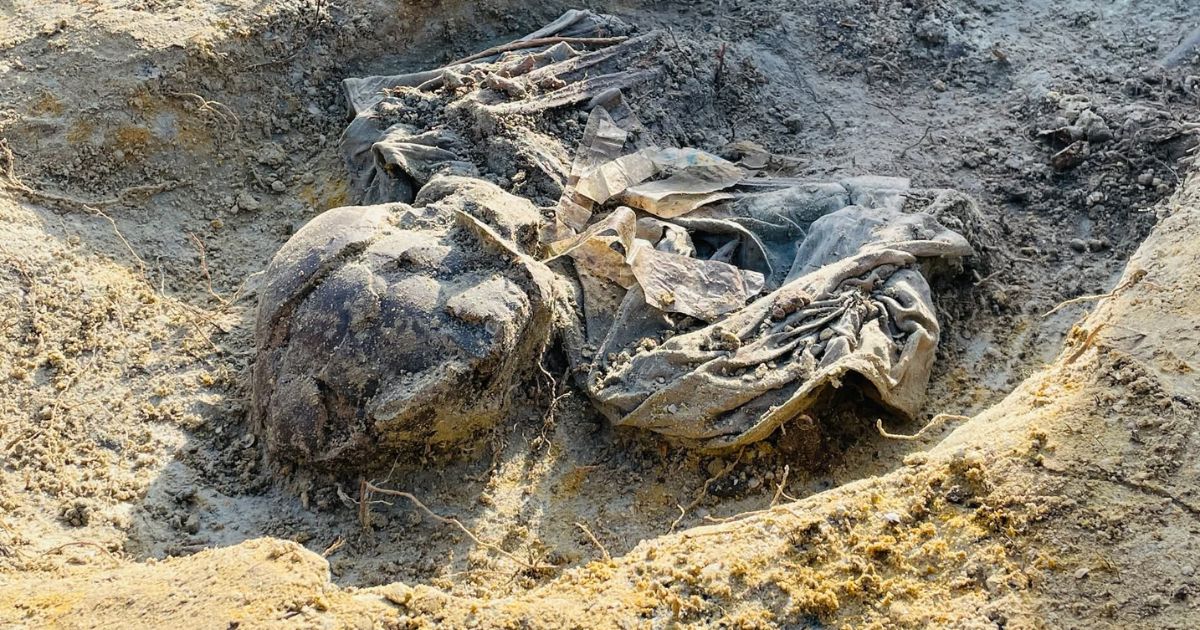
But earlier this year, the construction of a building in Chemmani led to the discovery of human remains again. In the months that followed, over 200 skeletons were excavated, including small children. Some were buried with their school bags on their backs, others with toys.
Chemmani adds to a long line of horrific discoveries over the past three decades. The largest excavation of a mass grave was in Mannar in 2013, leading to 318 skeletons. Two mass graves in the south of the island – in Sooriyakanda and Matale – speak of the violence associated with the JVP uprisings in the ‘70s and ‘80s.
GPR, DNA sequencing, and excavations
In mass grave excavations, technology is mainly used to assist investigations through non-invasive survey technologies like Ground Penetrating Radar (GPR) and DNA sequencing. But the Office on Missing Persons (OMP) believes that it’s important to learn from different contexts where effective mass grave investigations have been conducted.
“In many of them, we see the widespread use of technology for the different phases of investigation, from locating a site to bone analysis to the final identification of individuals. In Sri Lanka, investigators have used drones in some cases to record the site prior to excavation and to identify the boundaries of the grave. In other countries where eyewitnesses can’t provide precise coordinates of a gravesite, more advanced drones with LiDAR remote sensing are used to help pinpoint such locations,” notes OMP board member Mirak Raheem.
Raheem also explained that other technological inputs, like accredited DNA laboratories able to work with highly degraded bone samples, are vital in mass grave investigations. However, these technologies are expensive, requiring continuous investments.
“So, as a country, we must decide how these investments can be most efficiently made — whether through sending samples to foreign labs or by establishing our own.”

While new technology can be used, Raheem says it’s important to “take a step back” and consider the obstacles to effectively using existing technology. For instance, the law provides for the use of video testimony for witnesses and victims who are currently not in the country — a provision that he believes could be “critical” for moving individual cases forward.
“But this has not been widely used. So, we should ask why? Unless we address some of these challenges, such as security fears, we won’t be able to realise the full potential of new technology.”
Tech’s fallacy
He also emphasises the need to be aware that technology isn’t the solution for every issue. This is evident in the ‘CSI effect’ of DNA, where judges, juries, lawyers, and the general public see DNA as the gold standard. While DNA is vital for identification, it must not be treated as the only tool, as it has limitations and challenges like false positives from DNA tests, says Raheem.
Thus, he cautions against relying on one single method for identification: “We must compare antemortem information with the skeleton and associated finds, such as clothes and jewelry. We also need to look at circumstances, like other individuals who went missing at the same time from the same location, and whether their remains are also at the site. The use of this contextual data in conjunction with the more specialised forms of analysis, such as DNA, allows us to view the cases with a much more encompassing lens.”
The OMP recommends a multidisciplinary approach in order to conduct effective investigations into mass graves. Such an approach would go beyond the skillsets of forensic archeologists and anthropologists to also draw on those of geologists, ballistic specialists, historians, archivists, and criminal investigators, among others, to develop an integrated report.
Additionally, the OMP recommends the participation of families of the disappeared in mass grave cases who hold such critical information.
“While the OMP has been working on building its database on data of missing persons and sites of forensic interest, it has been advocating for a more extensive database including unidentified bodies and registered deaths, which would not only help the OMP but other state agencies to assist in investigations, protect the rights of citizens, and ensure the dignity of the dead.”
Social media
Unlike in previous instances when mass graves were discovered, Chemmani quickly garnered social media attention this year. Mostly northern journalists meticulously documented the months-long exhumations on various social media platforms. The story gained traction and refused to die. International media too picked up the story, understanding the significance it holds for Tamils, still asking for accountability.
The case is an example of the critical role played by social media in the conversation regarding the war. Satkunanathan says social media is important as there’s a “veil of silence in the Sinhala and English mainstream media, and to some extent social media, where issues related to the war, especially wartime violations, are concerned”.
“Therefore, it is social media that has enabled activists, survivors, and journalists to give visibility to justice and accountability issues. International media too often picks up these issues after it’s highlighted on social media.”
One north-based journalist says that audience engagement on posts documenting the exhumations at Chemmani is “extremely high”.
“More eyes from the south of Sri Lanka are on these posts, actively engaging. People are trying to understand what is happening in the north and the east. They’re asking: what is the truth? There’s a trust-building process happening through social media. I’ve also observed heightened engagement from journalists in the south, with some specifically saying they came to Chemmani for coverage after seeing ours on social media.”
However, this engagement can also be negative. One study analysing over 4,000 Sinhalese comments on eleven Facebook posts, reveals a “dominant pattern of defensive nationalism, systematic deflection through whataboutism, and disturbing dehumanisation of victims.”
Limitations
Recognising the democratising nature of social media platforms, recent Sri Lankan governments have taken the defensive approach. In early 2023, the Online Safety Act was passed, sending a chilling effect across the island on its potential consequences for free speech.
Even without the OSA, governments have weaponised the Prevention of Terrorism Act and the ICCPR Act to crack down on expression. Following the Easter Sunday terror attacks, the Muslim minority suffered under the PTA – one harrowing example is Ahnaf Jazeem, a poet imprisoned for years, but acquitted of all charges last year.
With the state using existing laws in such a cruel manner, the introduction of the OSA only added to the fears of rights activists and journalists. Within months of its introduction in 2024, politicians weren’t shy about its implementation. Those like Harin Fernando wrote to the IGP, urging action under the OSA for false claims about him.
Activists like Satkunanathan believe that governments have reacted in this way to restrict the online space because they understand the “pivotal role” played by social media.
For instance, in times of heightened political activity like the Digana riots in 2018 and the Easter Sunday terror attacks in 2019, governments have shut down social media altogether, restricting online speech. There were even attempts to curb online communication during the 2022 people’s protests against the Gotabaya Rajapaksa presidency.
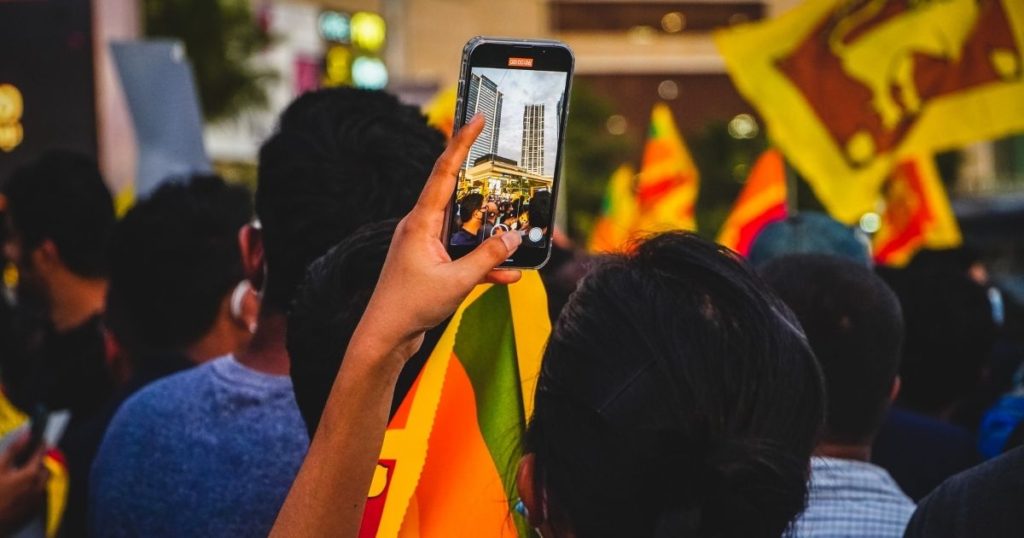
These attempts to control conversations online are complemented by offline harassment of activists, survivors, and journalists in multiple ways.
It’s not just the state controlling speech online. Fingers have also been pointed at big tech for removing and filtering sensitive narratives – a problem not limited to Sri Lanka. For example, social media giants have also been accused of filtering content critical of Israel since 2023.
The generative AI problem
Meanwhile, the online dialogue about Chemmani has also led to other worrying incidents. Lawyer Ranitha Gnanarajah, who represents family members of the disappeared, highlighted incidents where social media users created images using AI to generate humans for the photographs of the exhumed skeletons.
“The AI created the wrong gender and age. Sensationalising issues in this way has the direct opposite of seeking justice, and must not be accepted by the community. Such actions can water down the process that is happening at the ground level, and also increase the trauma or stress of the family members,” says Gnanarajah.
The lingering question
When the armed conflict was drawing to a bloody close, government censorship worked to control narratives. Only state media were allowed inside the war zone in May 2009, during the war’s final days. In the years before, clear divisions were seen between the coverage in the Sinhala press and the Tamil press. Sinhala Buddhist majority views took center stage, and links have been drawn between media censorship, media culpability, and war crimes.
Today, we live in a different era. Technology can help unearth the truth, and social media can help disseminate it, but the question still lingers: how do we use that truth in the pursuit of accountability and to support those in their pursuit of justice? The answer to that question may not be found on social media platforms, but through collective action that goes beyond.


GIPHY App Key not set. Please check settings